The 7th Street Journal


Outdoor Vehicle Storage: A Complete Guide for RV, Boat, and Car Owners

Vehicle Storage


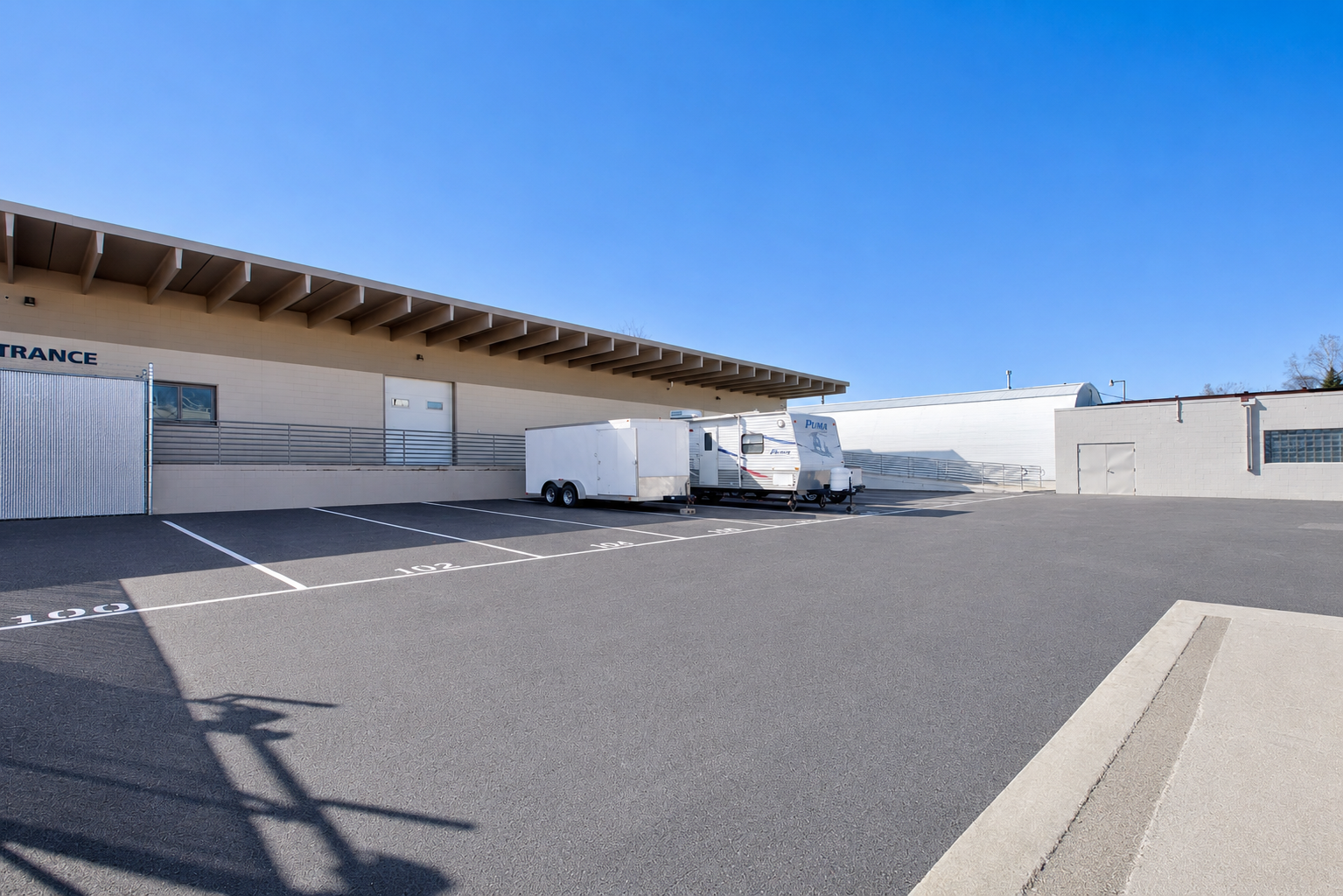
Outdoor vehicle storage lot at Storage on 7th in Faribault, MN with painted numbered spots on asphalt and a parked travel trailer and cargo trailer.

If you've got an RV, a boat, a classic car, a trailer, or an extra vehicle that won't fit in your garage, outdoor vehicle storage is usually the most affordable option for keeping it somewhere safe. It costs a fraction of what indoor storage runs, the lots are typically secured and monitored, and most facilities can accommodate everything from a standard sedan up to a 50-foot motorhome. The catch is that not all outdoor lots are equal. The difference between a well-run lot and a neglected one shows up in surface quality, snow removal, security, pest control, and how much real access you have to your vehicle. I run Storage on 7th in Faribault, Minnesota, and our outdoor vehicle storage serves boat owners, RVers, snowbirds, classic car collectors, and small businesses storing trailers and equipment. Below is what I tell people when they're considering outdoor vehicle storage for the first time. 1. What Outdoor Vehicle Storage Actually Is Outdoor vehicle storage is exactly what it sounds like: a fenced, monitored lot where you park your vehicle for as long as you need it. You back into your assigned spot, lock up, and come back when you're ready to use it again. Unlike indoor storage, your vehicle is exposed to the weather. That tradeoff is the main reason it costs less. For vehicles that are built to handle weather (most boats on trailers, most RVs, most cars and trucks), outdoor storage works fine. For high-end classic cars, show vehicles, or anything you're actively trying to preserve in pristine condition, indoor storage is usually the better call. People use outdoor vehicle storage when: Their RV or boat is too big for their driveway, or their HOA won't allow it They want their boat or RV out of the way during the off-season They're snowbirding south for the winter and need somewhere safe to leave a car They have a classic, project, or extra vehicle that doesn't fit in the garage They run a small business and need to park ...


Ryan E.
June 18th, 2025


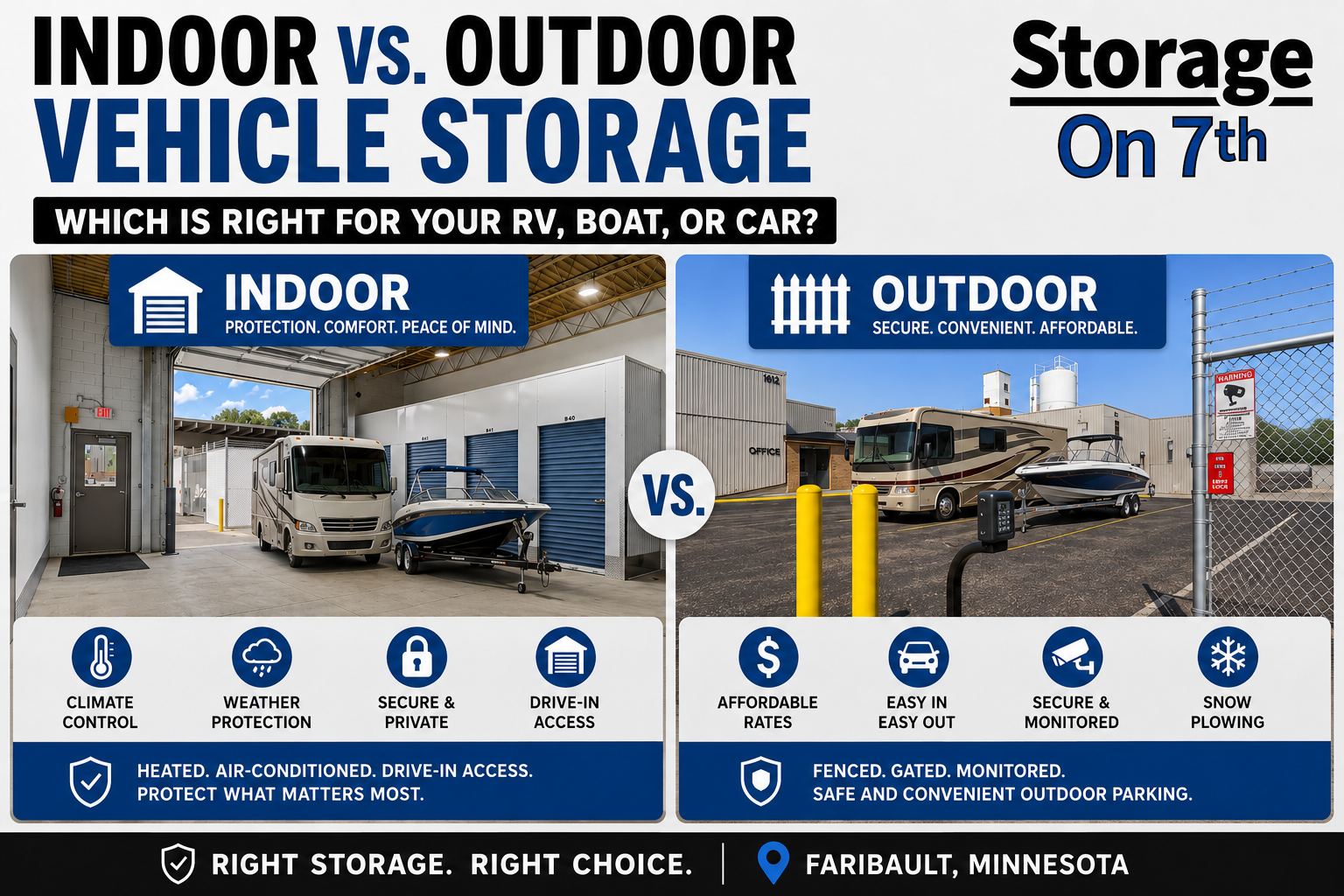
Indoor vs. Outdoor Vehicle Storage: Which Is Right for Your RV, Boat, or Car?

Vehicle Storage


Which Storage Is Right For you: Indoor or Outdoor

If you've decided you need to store a vehicle somewhere other than your driveway, the next decision is whether to go indoor or outdoor. Most facilities offer both, and the cost difference is significant — indoor typically runs four to six times the price of outdoor for the same footprint. That price gap is real, and the right answer depends entirely on what you're storing, how long you're storing it, and how much you care about its condition when you come back to it. I run Storage on 7th in Faribault, Minnesota, where we offer both indoor and outdoor vehicle storage. Below is the honest comparison I give people when they're deciding between the two — including the cases where I'll actively talk someone out of paying for indoor when they don't need it. 1. The Price Difference Up Front Pricing varies by region and facility, but here's a useful range to anchor on. At Storage on 7th: Outdoor vehicle storage: starts around $60/month for a 10x20 spot and runs up to about $100/month for a 40-foot spot Indoor vehicle storage: runs about $325/month for a comparable 10x20 unit That's roughly a 5x premium for indoor. Over the course of a year, you're looking at $720 outdoor vs. about $3,900 indoor for the same-sized vehicle. Over five years, the gap is more than $15,000. That's not a small difference, and it deserves serious consideration before you default to indoor "just to be safe." 2. What Indoor Storage Actually Gives You That Outdoor Doesn't The premium gets you several real protections: Climate control. Indoor units are heated in winter and air-conditioned in summer. Your vehicle isn't subjected to freeze-thaw cycles, deep cold that strains batteries and fluids, summer heat that degrades interiors and rubber, or humidity swings that promote rust. Total weather protection. No rain, no snow, no hail, no sun, no wind-blown debris, no salt spray during winter road treatment. Your vehicle stays dry and clean. Better pest protection. Most quality outdoor lots have pest control (ours ...


Ryan E.
July 10th, 2024