.png)
Can I Rent a Private Office Space for Just One Person?
What a private one-person office actually costs in Faribault, Minnesota — and how to know if it's worth it for your business.
Can I Rent a Private Office Space for Just One Person?
What a private one-person office actually costs in Faribault, Minnesota — and how to know if it's worth it for your business.
Ryan E.
October 27th, 2023
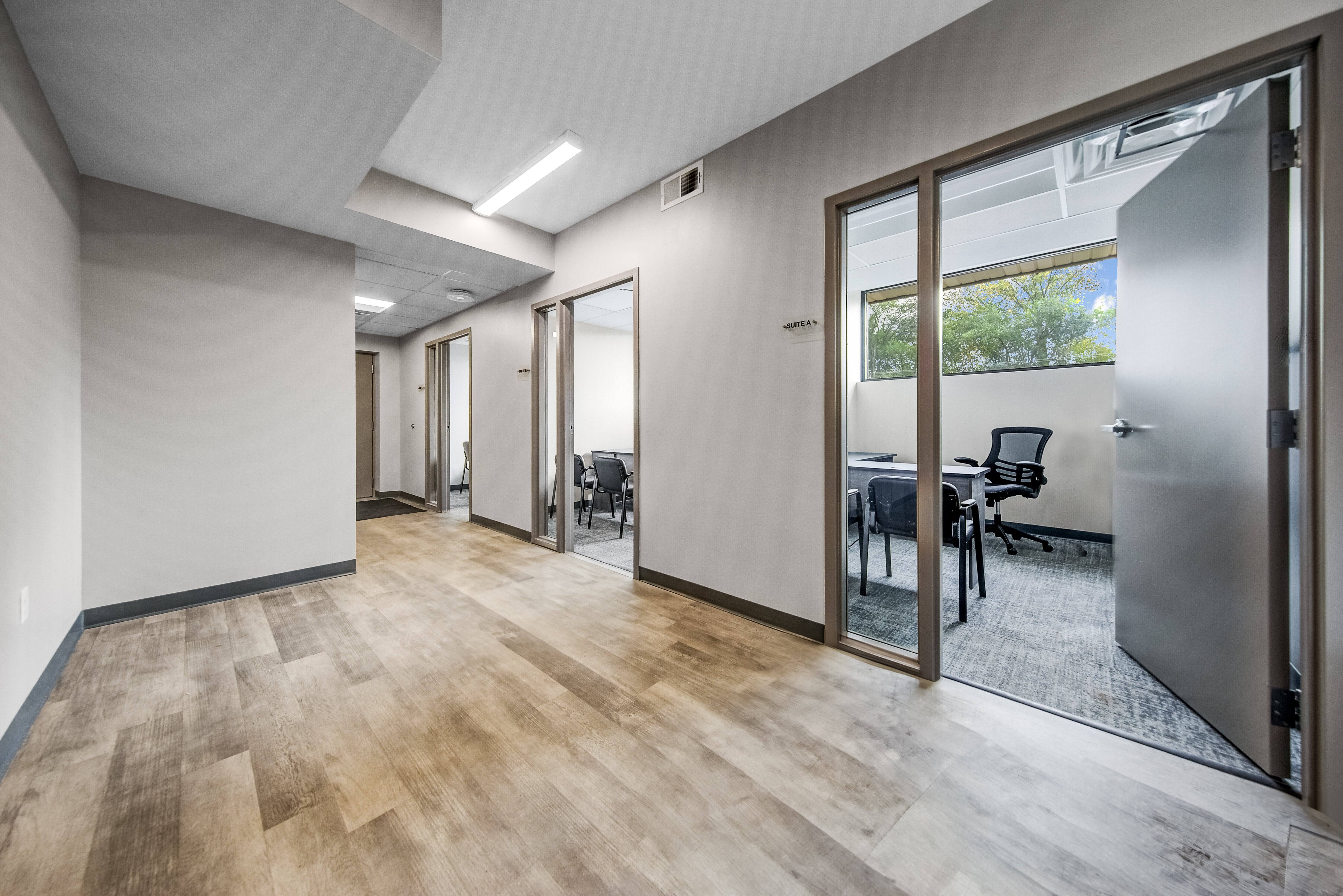
Yes, and it's a more affordable option than most people realize. Single-person private office rentals exist in most towns, even small ones, and they often cost less than a coworking membership in a larger city. At Storage on 7th in Faribault, Minnesota, single-occupant offices run $200 to $400 per month, with everything included. The bigger question isn't whether you can rent one. It's whether it makes sense for what you do, what to look for, and what to ask before you sign. I've been running Storage on 7th for six years, and our offices serve a wide mix of solo operators — from financial services professionals to driving school instructors to one-person logistics companies. Below is what I tell people when they're considering renting their first private office.
1. Yes — Here's What That Looks Like at Storage on 7th
Our single-person offices are roughly 100 square feet. That's enough room to fit an L-shaped desk, an office chair, and two lounge or guest chairs for clients. The space comes finished with drywall, windows, carpet, and good lighting. You bring your own furniture and equipment. It's a real, lockable, private office. Not a hot desk, not a shared cubicle. When you leave at the end of the day, you close the door behind you and everything stays exactly how you left it. That's a meaningful difference from most coworking arrangements, where you have to clean up your station every time you leave.
2. What It Costs
Pricing for single-person offices at Storage on 7th ranges from $200 to $400 per month, depending on the specific office and finish. For context, that's typically less than:
- A traditional commercial lease of similar size, once you factor in separate utilities, internet, and trash service
- A premium membership at a coworking space in a metro area
- A private office at a national executive suite chain like Regus or WeWork
It's worth noting that coworking spaces in small towns like Faribault are uncommon, and the few that exist often don't offer true private offices, just shared desks or small phone booths. If you genuinely need privacy and the ability to leave equipment and paperwork out, a dedicated office is usually the most practical option.
3. What's Included in the Rent
This is where the real cost comparison gets interesting. Our office rent is one flat monthly payment that includes:
- Heat, air conditioning, and electricity
- Wi-Fi internet
- Parking
- Mailbox access and use of our address as your business address
- After-hours building access
- Bathroom facilities
- Trash service
That matters because in most traditional office rentals, you're paying separately for some or all of those — utility bills from multiple providers, an internet contract you have to negotiate yourself, parking fees, mailbox service if you want a business address. Once you add it all up, a "$300/month" traditional lease can easily become $500/month. We keep it as one bill on purpose. Tenants running their own businesses already have plenty to manage. The last thing they need is six different vendor relationships just to run their workspace.
4. Who Actually Rents Single-Person Offices
The mix is broader than you might expect. At our facility alone, we have tenants in:
- Trucking and logistics
- Financial services
- Vehicle repair (using the office for the admin side of the business)
- 3D printing services
- Early-stage entrepreneurs
Beyond what we see directly, single-person offices are also popular with:
- Real estate agents and insurance agents who need a professional space to meet clients
- Therapists, coaches, and tutors who need privacy and a quiet environment
- Accountants, bookkeepers, and tax preparers
- Solo attorneys and consultants
- Freelance designers, writers, and developers who are tired of working from coffee shops
- Remote employees whose home isn't a productive workspace
- Side-hustlers who've outgrown the kitchen table
If you do work that benefits from privacy, focus, or a professional setting to meet clients, a single-person office probably fits.
5. A Real Tenant Story
One of our tenants runs a driving school out of one of our offices. Before they had a dedicated space, the operation was informal. They'd meet students wherever, handle paperwork in their car, and operate without a real "front door" for the business. Once they moved in, the whole operation leveled up. Students now come to the office, sit down, fill out paperwork, and then head out into the student driver car. The professional setup made the business feel real to clients, and it made day-to-day operations a lot smoother. That's a pattern I've seen play out for a lot of solo operators. The right physical space doesn't just give you a place to work. It changes how clients perceive you, and it often changes how seriously you take the business yourself.
6. Lease Flexibility and Room to Grow
All of our offices are month-to-month. No long-term commitment, no annual contract, no early termination fees. You sign up, you pay for the month, and if it doesn't work out you give notice and move on. That low commitment matters when you're trying a new business or transitioning out of working from home. You're not betting on a year of office rent before you know whether your business needs it. If your business outgrows the office, we have larger commercial and workshop spaces on the same property. A common move is for a tenant to start in a 100-square-foot office, then graduate to a workshop with a small office cube built in when they need both work area and admin space. Same facility, same lease relationship, no need to relocate.
7. What to Look For as a First-Time Renter
If you've never rented an office before, here's what to ask and what to look for on a tour. Ask exactly what's included in the rent. Is it just the headline number, or does it cover utilities, internet, parking, trash, mailbox, and after-hours access? Hidden line items can quickly turn a "cheap" office into the most expensive one on your shortlist. Ask about the lease term. Month-to-month is the most flexible. Annual leases sometimes come with a discount, but only commit if you're confident you'll need the space that long. Pay attention to who else works in the building. This is one of the most underrated factors in office rentals. Your neighbors become part of your daily work environment. A building full of like-minded small business owners can lead to natural networking, informal advice, even client referrals. A building full of conflicting uses or neglected tenants can make the experience worse than working from home. Check the basics in person. Cell signal, Wi-Fi speed, parking convenience, climate control, bathroom cleanliness, lighting quality. Things that don't show up on a website but make a real difference five days a week. Ask about the manager or owner. If something breaks, who fixes it? If you have an issue, who do you call? At a corporate facility, the answer is often "submit a ticket." At an owner-operated place, the answer is usually "call me directly."
8. When It's Worth the Cost (And When It Isn't)
Honest take: not every solo operator needs an office. A private office is worth $200 to $400 per month if:
- You meet with clients and want them to walk into a professional space rather than your home
- You need privacy for sensitive conversations (financial services, therapy, legal, coaching)
- You have specific equipment, supplies, or printers you want to leave set up and not move every day
- You struggle to focus at home and have already tried the alternatives
- You want clear separation between work life and personal life
A private office probably isn't worth it if:
- You don't meet clients and never will
- You have minimal equipment and can comfortably work from a laptop in any environment
- Your home setup is already productive and quiet
- Your business margins genuinely can't absorb the additional monthly overhead
If you're in the second group, working from home or rotating between coffee shops and the library is probably the better financial move until your circumstances change.
9. Small Owner-Operated vs. National Chains Like Regus or WeWork
National chains like Regus and WeWork serve a real purpose, but they're a different product than what an owner-operated facility offers. The chains generally make sense if you're in a major metro area where they actually have locations, you travel often and want access to a network of offices in different cities, you need a high-end branded environment for client meetings (glass walls, designer furniture, branded coffee bars), or your business or your clients expect a corporate feel. A small owner-operated facility like ours generally makes more sense if you're in a smaller market where the national chains don't operate, you want simple, predictable, all-inclusive pricing without a long list of add-ons, you value knowing the person who owns and runs the building, you'd rather have a professional but unpretentious space than a polished corporate one, or you want the flexibility to scale up to a workshop or larger space without changing facilities. The biggest difference is the relationship. At a national chain, you're a customer of a brand. At a small facility like ours, you're someone the owner actually knows. That matters when you have a question, when something breaks, when you need a favor, or when life happens. As an owner, my job is to give my tenants the tools they need to run a successful business, and that's a hard thing to deliver through a national help desk.
10. What Surprises People After They Move In
A few things tenants often tell me they didn't expect, in roughly equal measure good and bad. The productivity jump is real. Most people who move out of their home office report that they get noticeably more done, in less time, with fewer distractions. Even people who thought they were already productive at home are often surprised by the difference. You start treating your business more seriously. Having a dedicated space, an address, and a door you can put your business name on makes it harder to think of your work as a side project. That mental shift often pushes people to invest more, charge more, and treat their work as the real business it is. The community matters more than expected. Even in a building of separate private offices, you bump into your neighbors. You learn what they do. You ask each other questions, share contractor recommendations, sometimes hire each other. It's quieter than coworking, but the social benefits are still real. The work/home separation cuts both ways. Most people love the clean break: work stays at work, home stays at home. A few people miss the small flexibilities of working from home, like throwing in a load of laundry between meetings or being there when a package arrives. It's worth thinking about before you sign. Furnishing the office costs more than you planned. A desk, a good chair, a monitor or two, a printer, a small filing cabinet. Spend a little more on the chair than you think you need to. You'll be sitting in it for years.
A Final Word from Faribault
If you're a solo operator in or near Faribault, Minnesota and you've been wondering whether a small private office could work for you, the answer is almost certainly yes — and it probably costs less than you think. We have offices available with everything included for $200 to $400 per month, on a month-to-month basis, with room to grow into a larger space if your business takes off. Stop by, take a tour, ask whatever questions you want. Bring a list of what you actually need from a workspace, and we'll be honest with you about whether one of our offices is the right fit. If it isn't, we'll tell you that too.
The 7th Street Journal